Fixing the Visibility Gap
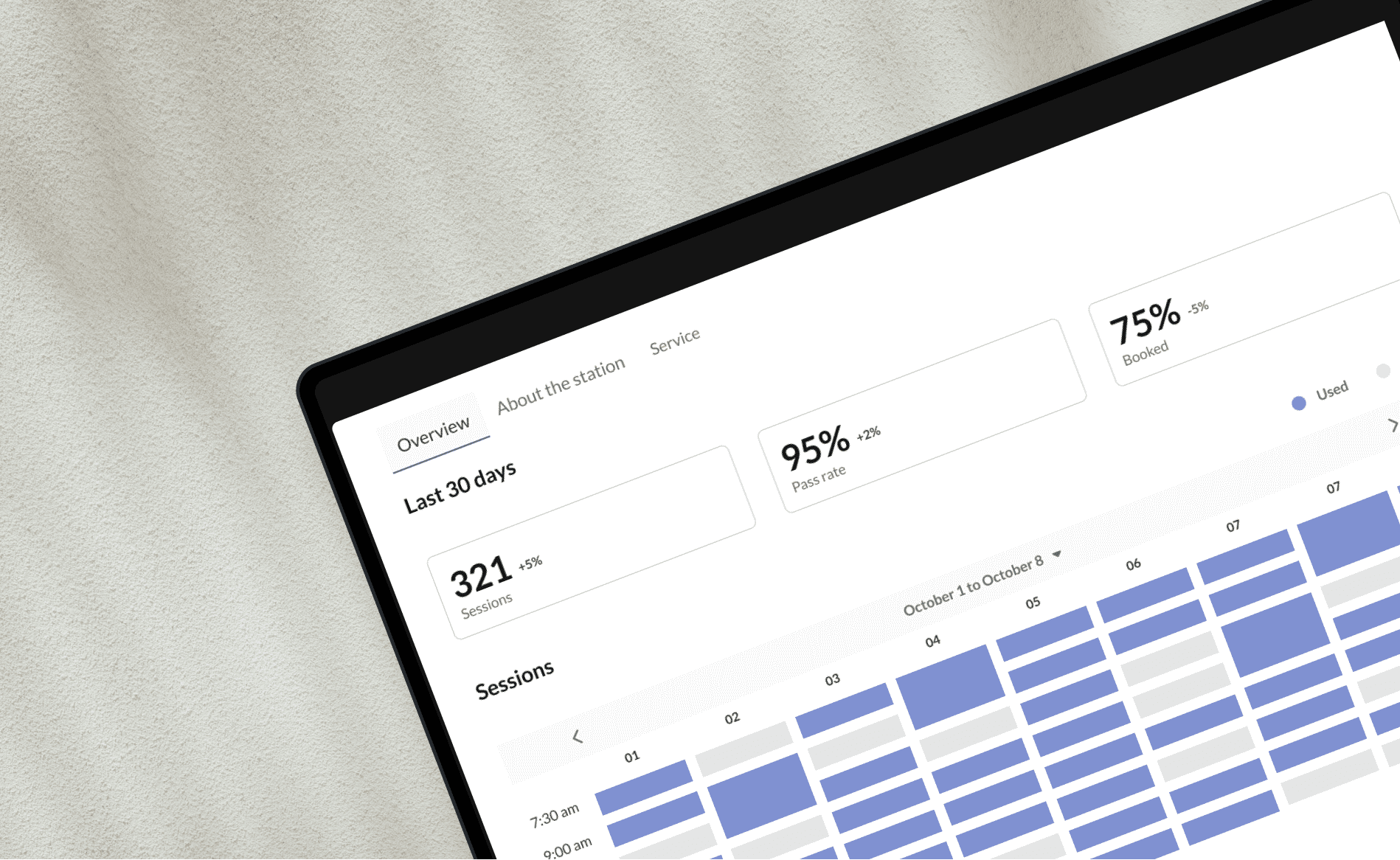
Designing visibility for American Heart Association training stations across US
Role
Product Designer
Timeframe
2025-26
Team
PM, Engineer, Designer
Platform
Web · Mobile
Discovery
The problem surfaced through conversations.
I was speaking with internal teams about their day-to-day work. Across conversations, the same pattern kept appearing.
Problem
Managing inventory was difficult at scale.
Internally:
Sales teams couldn’t locate stations
Production teams lacked post-deployment visibility
Externally:
Distributors managed hundreds of stations
Usage, health, and maintenance were unclear
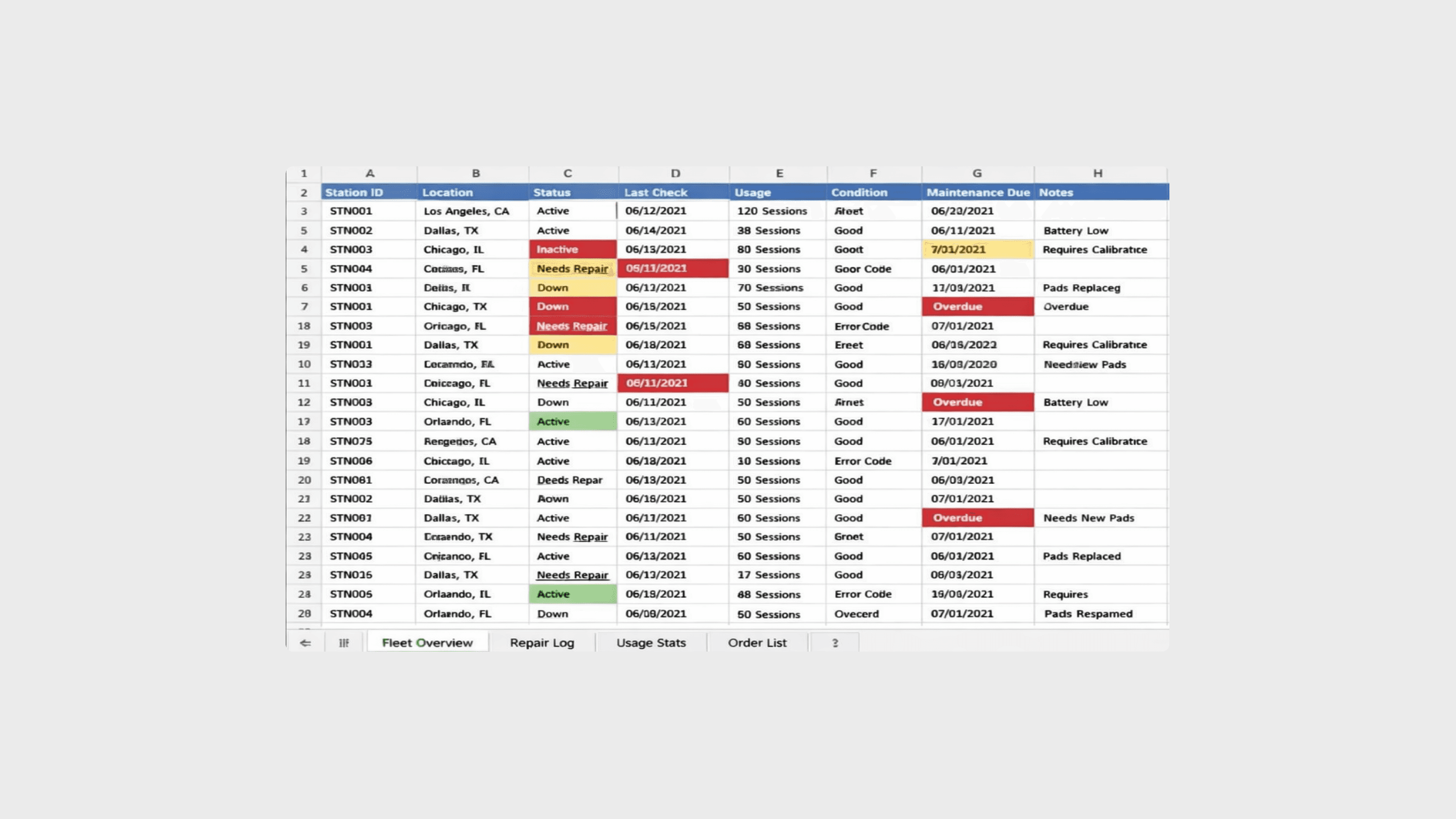
Tracking relied on spreadsheets and manual updates, making maintenance and visibility unreliable at scale.
Impact
When stations went down, training slowed.
Lower station availability reduced training throughput.
Fewer healthcare workers could complete CPR training.
For distributors, this directly affected revenue.
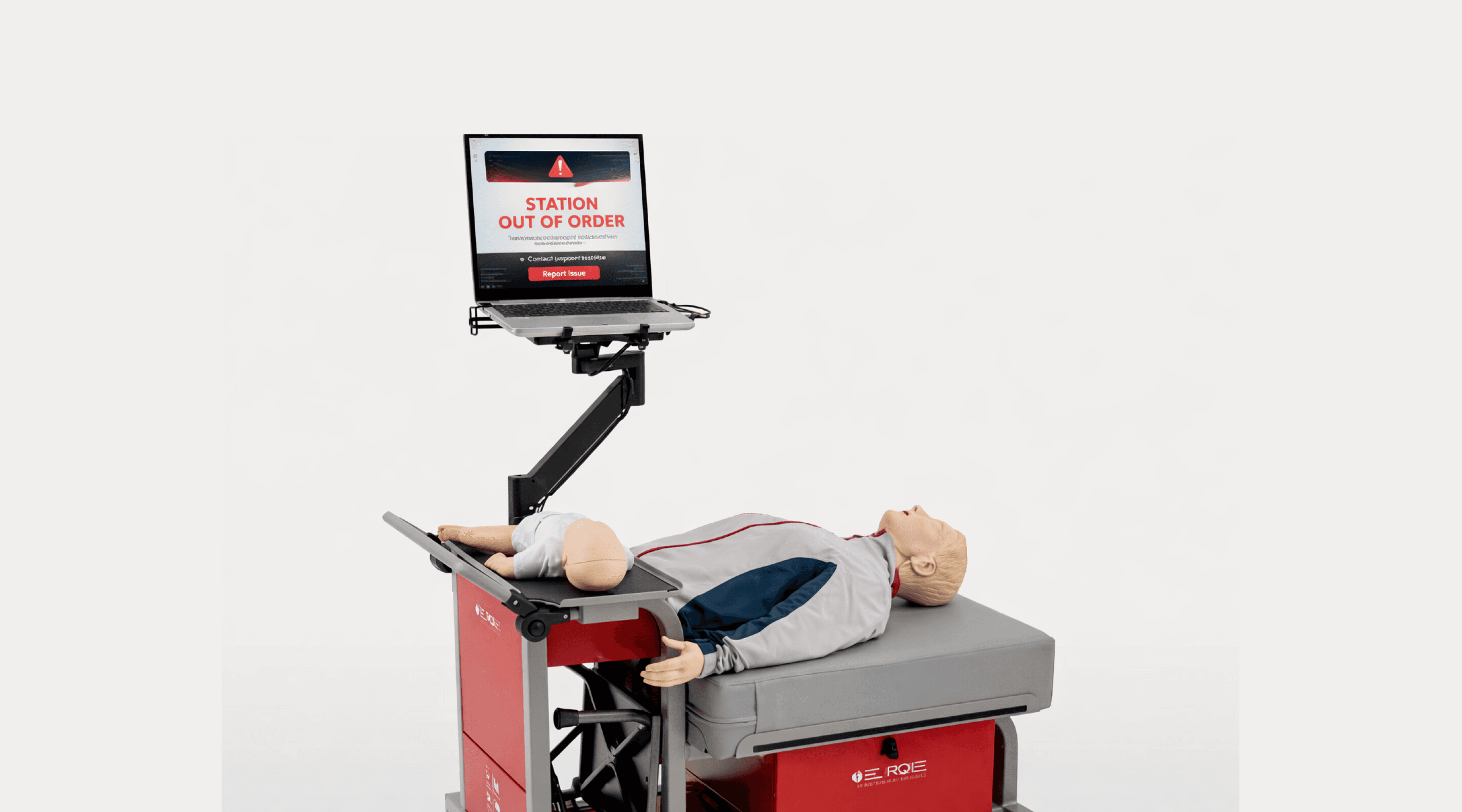
Downtime directly reduced training throughput and distributor revenue.
Initiative
I made the problem visible by building a lightweight AI prototype to show how the system could work.
I recorded a short demo to communicate the opportunity clearly.
Once teams could see the problem and a possible direction, alignment followed.
This work led to design ownership of Fleet Management.
This early demo created clarity and led to design ownership of Fleet Management.
Key Decisions
As Lead Designer, I was responsible for defining experience priorities and trade-offs across teams.
Primary decision
Distributor-first
Why: Direct impact on training throughput and revenue Measured: Downtime, preventive actions, training completion
Supporting decisions
Create a market place
Why: Enable end-to-end station discovery and booking Measured: Stations listed and booked
Build a reusable building block
Why: Scale across teams without rework Measured: Internal adoption by other teams
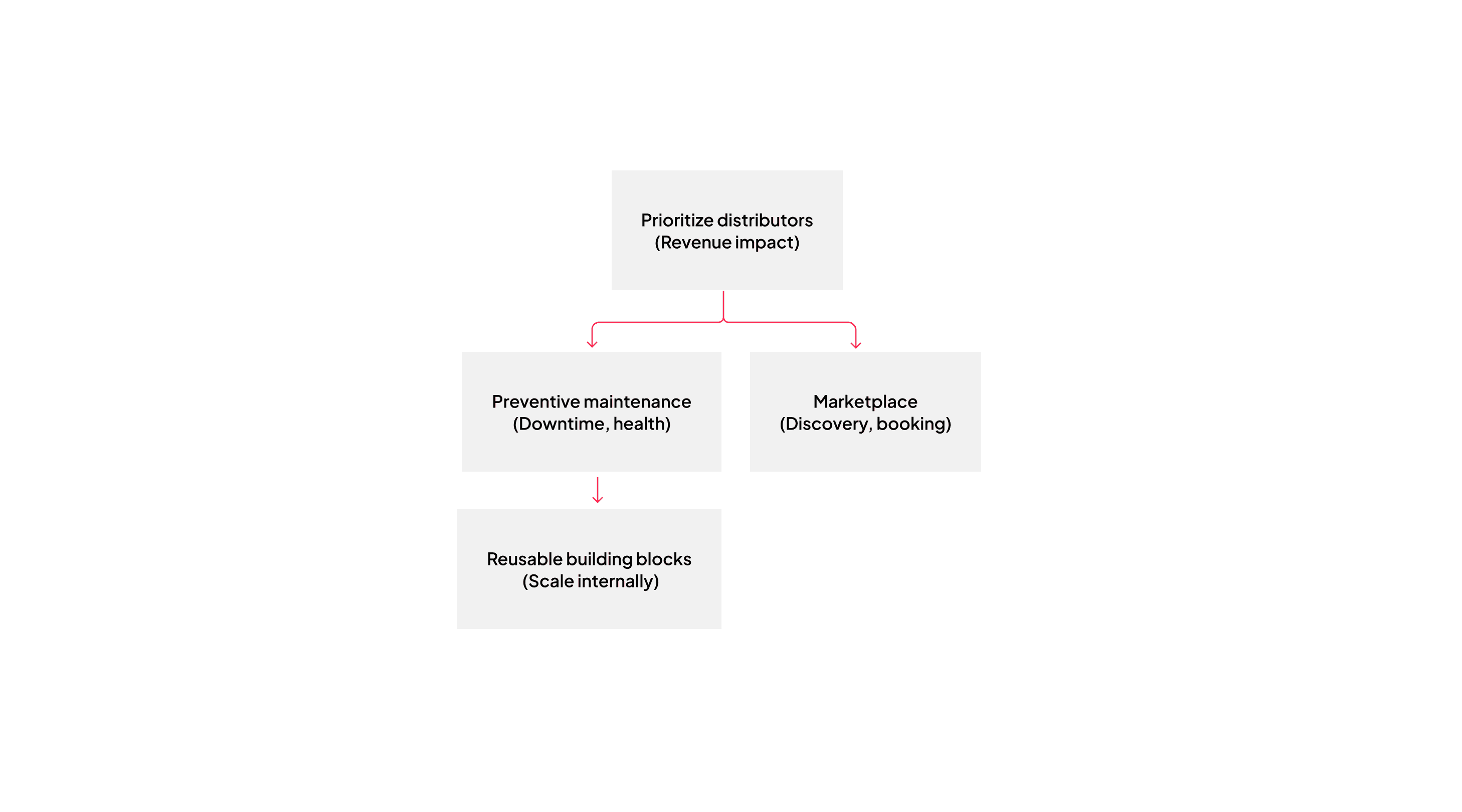
We optimized for revenue impact first, then expanded through reuse.
Research
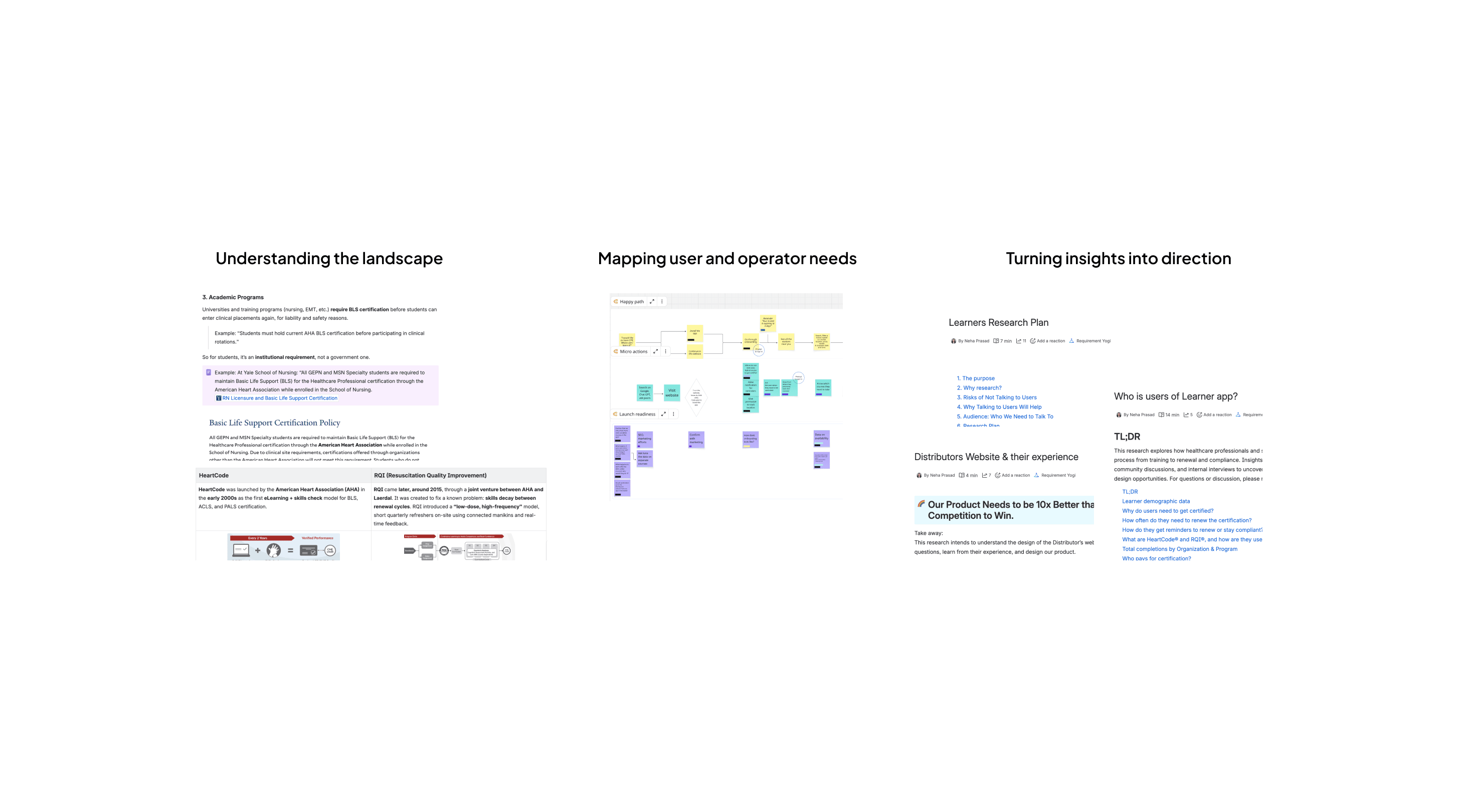
Research helped clarify how operational constraints and user behavior shaped the system.
Spoke with distributors and internal teams to understand operational breakdowns at scale
Studied how users discover and choose CPR training through secondary research
Synthesized insights into clear product direction and team alignment
Design
The product followed a clear hierarchy to support fast decisions:
Fleet overview to quickly understand network health
Station detail to take action when issues surfaced
Usage data to connect performance with training and revenue
Design the Vision
I created a vision video to articulate the end-state experience. The founder used it in All Hands to align product, engineering, and commercial teams on direction and priorities.

I created a vision video using AI to communicate the idea to the team of 200+
Outcome
Fleet Management launched across distributor networks in under five months.
20 distributors onboarded
Clear visibility into downtime and revenue impact
This work expanded into ownership across two products:
Fleet Management (internal + distributor operations) and CPR Finder (end-to-end discovery, booking, and training).
Reflection
As teams scaled, design quality depended less on individual decisions and more on shared understanding.
Closing knowledge gaps through documentation, vision artifacts, and constant context-setting became essential to maintaining speed and coherence.
Prioritizing distributors unlocked revenue impact quickly, but it also meant delaying some internal improvements. That trade-off was intentional and required continuous expectation setting as the product grew.