CPR Finder · Laerdal Medical × AHA
One AI workflow, from research to pull request
Speed matters on a new product, so I write the code myself, in the same codebase as the developers.
DraftPublished Updated 2 min read
This is a working draft. I’m still filling it in.
Top 4
Code contributor, and the only designer on the list
6,370
Lines of code, July to October
On this page
How I got onto this team
I got onto this team by building something nobody asked for. I’d been making small AI tools for myself. Then I found a real problem at work: sales teams struggled to keep track of expensive demo units, and someone called around every week to find them. I built a tool and made a demo video. The video spread across the company, and when a team formed to build it, they picked me to lead the design. That path led me to CPR Finder.
From research to pull request
Every step runs through one AI workflow, from the first brainstorm to the pull request.
Brainstorm
Research recordings and briefs.
Workshop
Miro.
Design together
Figma.
Document
Confluence.
Plan tickets
Jira.
Test
Playwright.
Build and PR
Review, then iterate.
Real code, in the same repo
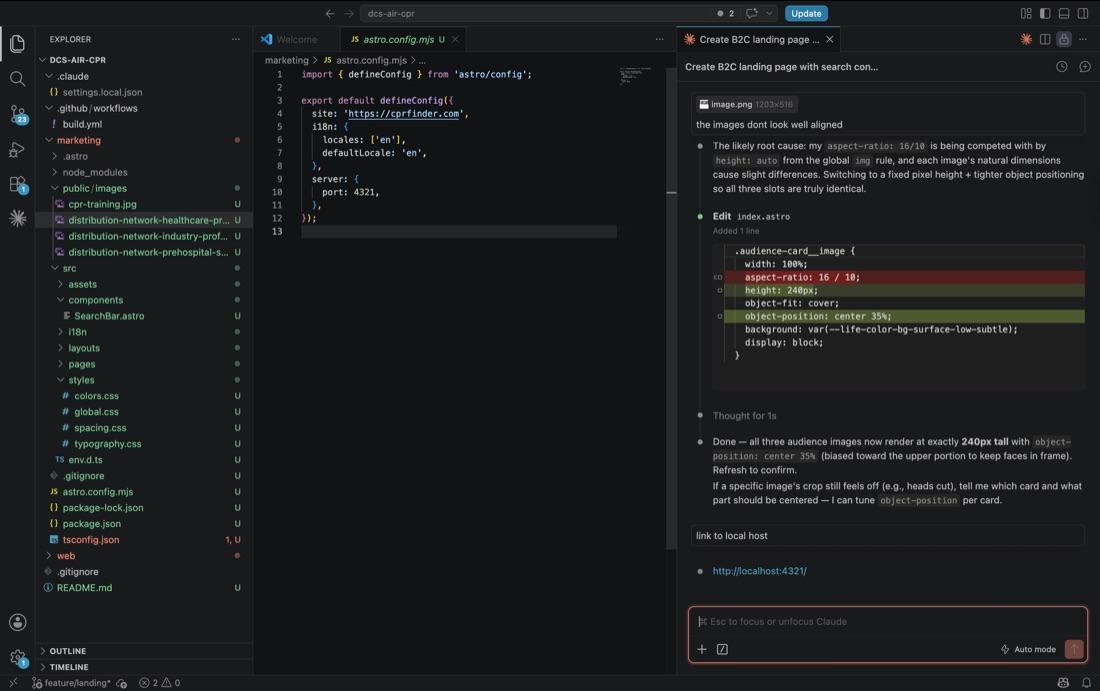
I design and build with Claude Code and Figma AI in the same codebase as the developers.
I don’t wait for someone to write a ticket. I find the gap, design the fix, build it, check what it changed, and keep going.
- I’m one of the top 4 code contributors to the CPR Finder repo, and the only designer on that list: 6,370 lines from July to October.
- I use the same pull request and code review process as everyone else. I open the PR, and a developer reviews it.
- I set the handoff standards: Confluence pages that cover UX, trade-offs and technical blockers. That made the path from design to production shorter.
Working this way, I can take a design to production in days. That’s how the new site went live in 9.
A QA system that tests like our learners
Small team, lots of flows, lots of screen sizes. So I gave our testing a memory and let it walk through the product as every kind of learner.
A brain keeps the context
Call recordings, docs and my notes after every meeting, all in one place.
It reads Jira and GitHub
So it knows what changed, what broke and what's still open.
Playwright runs every flow as each type of learner
On phone, tablet and desktop sizes.
I design the fix in Figma
Where a flow breaks, I design what it should do.
Tickets with proof attached
Each fix goes into Jira with what the test found.
Work in parallel
I take a few tickets, and the team works on the rest at the same time.
What I learned
- I mean it when I own it. I find the gap and ship the fix.
- Work in the same repo as the developers. Same pull requests, same reviews, and a shorter path from design to production.
Topics: design to code, AI, design engineering. Also as plain markdown.