Life · Infinity Games
A symptom quiz built from 200+ interviews
Every feature on Life started with something we kept hearing in interviews. The symptom quiz and the AI assistant came straight from them.
DraftPublished Updated 2 min read
This is a working draft. I’m still filling it in.
On this page
What women kept telling us
Most women don’t know how much of what they feel is normal, or worth doing something about.
I ran 200+ interviews and read threads about stress, mood and cycles. They showed us where our words didn’t land, and what women actually wanted to know.
Before Life, I worked in women’s wards at a hospital. I taught women how their bodies work, and I interviewed them and wrote down the changes they went through in menopause. With that background, I also wrote the logic behind the app’s health tips.
I turned what I heard into decisions about what to track, how to personalize it, and how to build a daily habit.
A quiz that never sounds clinical
I built a quiz that asks about your symptoms in plain words and turns your answers into a warm personality result.
It opens with one plain question: which changes do you notice before your period? Mood, body, energy, or none. Pick as many as you like.
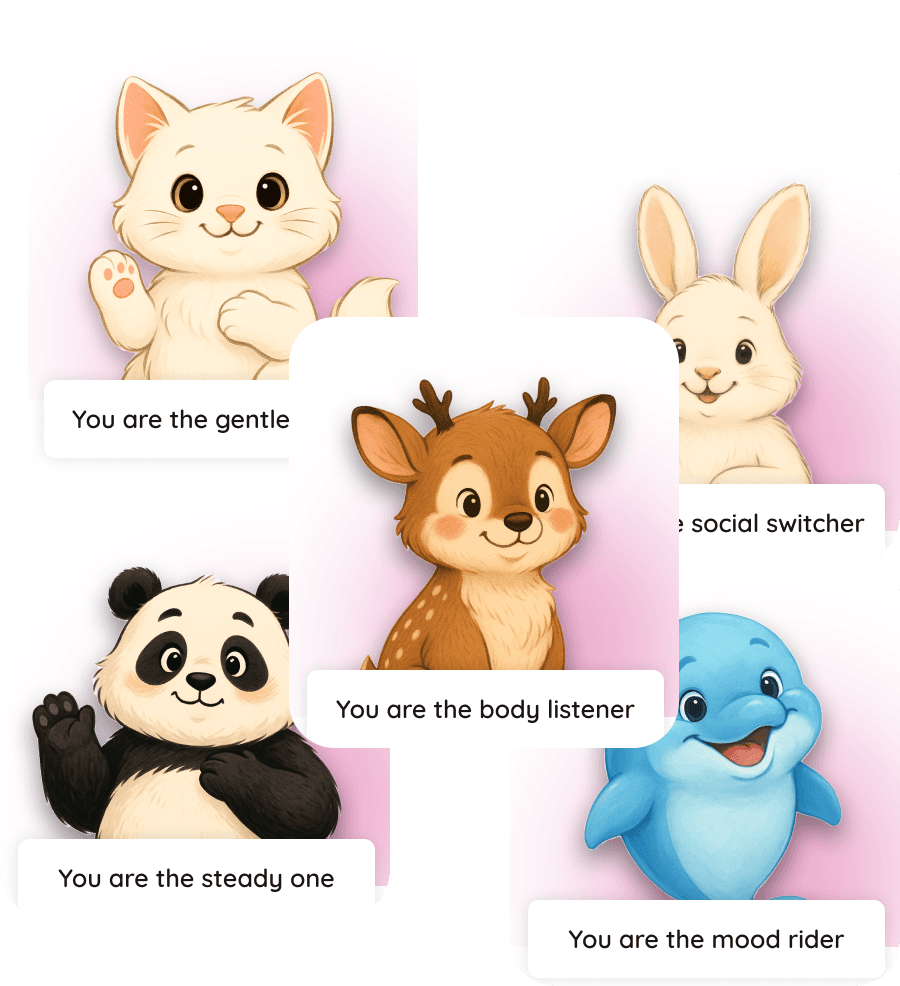
At the end you get a character. One result says “You are the body listener,” with scores for energy, mood and stress recovery, and a meter that shows how much your period affects your days.
An AI assistant that turns knowing into doing
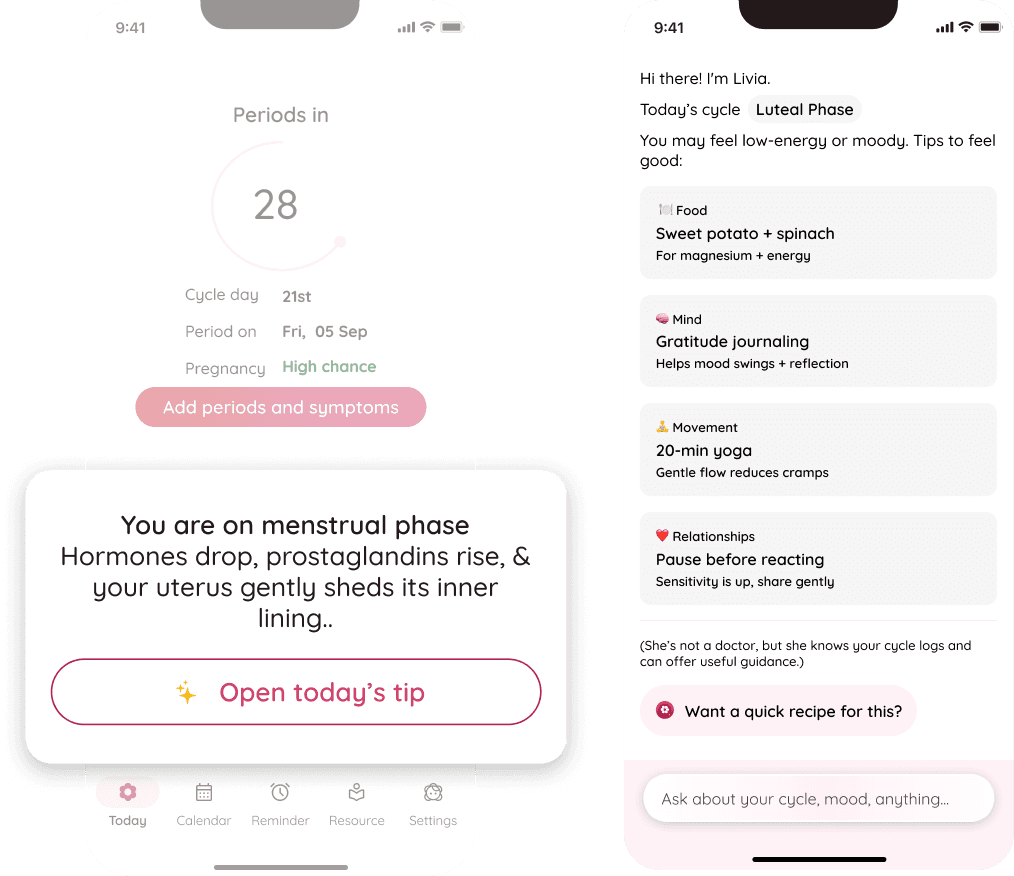
An AI feature reads where you are in your cycle and shows a daily tip.
In chat, it suggests four things to try for that phase, across food, mind, movement and relationships, so knowing turns into doing.
The assistant is called Livia. She says it up front: she’s not a doctor, but she knows your cycle logs and can help.
In the luteal phase, Livia might suggest sweet potato and spinach for magnesium, a few minutes of gratitude journaling, 20 minutes of gentle yoga, and pausing before you react.
What I learned
- Every answer a woman gives should give her something back. Period apps that only collect data wear people out.
Topics: women's health, research, onboarding. Also as plain markdown.